
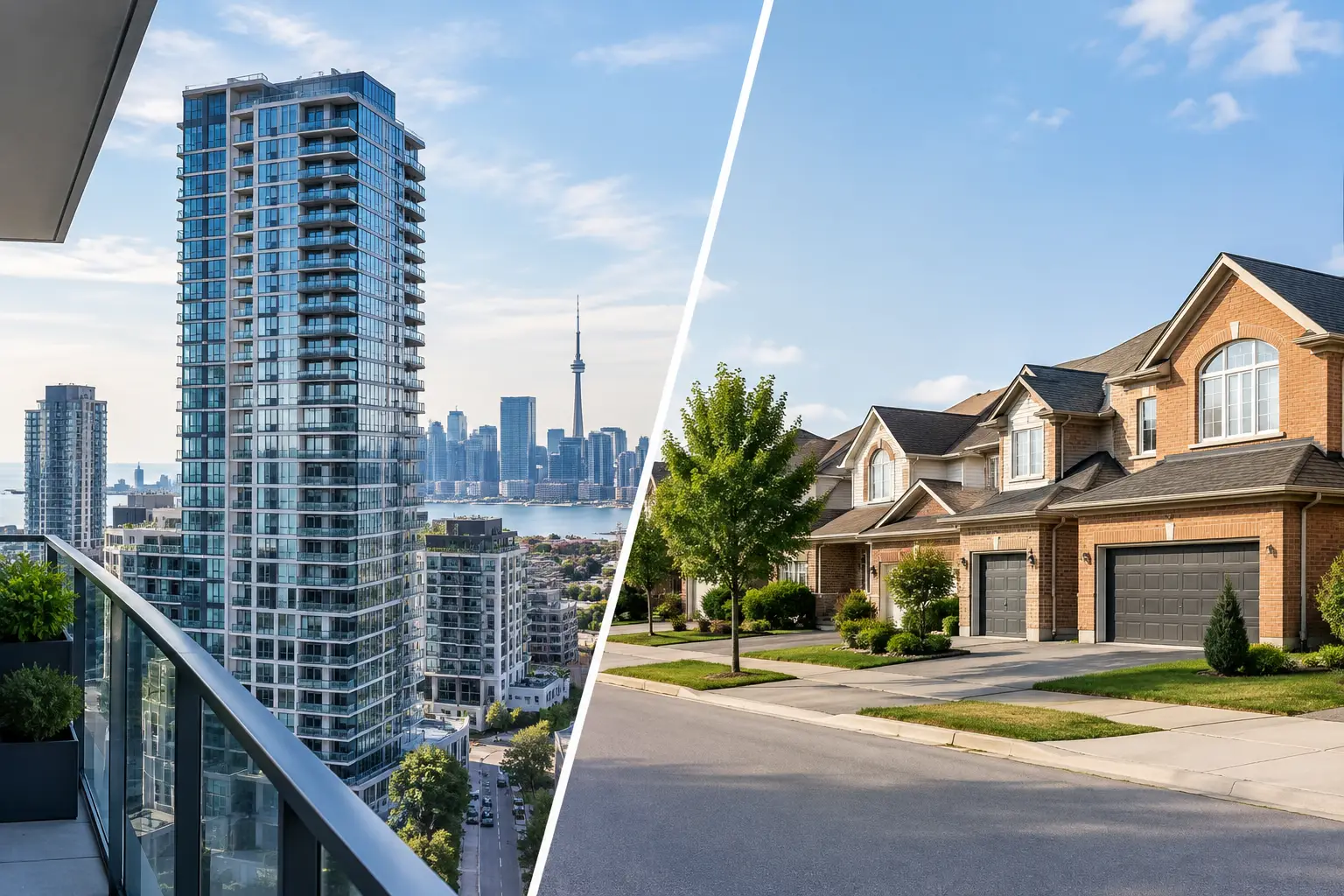
Condo Versus Freehold Ownership in the GTA
A home purchase can look very different on paper than it does on a Sunday afternoon. A condo may offer a shorter commute, building amenities, and fewer exterior chores. A freehold home may offer a yard, more privacy, and greater control over the property. Understanding condo versus freehold ownership helps you weigh those day-to-day realities alongside the long-term responsibilities that come with each choice.
For buyers across Brampton, Mississauga, Caledon, and the wider GTA, neither option is automatically better. The stronger choice is the one that fits your budget, household needs, time, and plans for the next several years.
What Condo Ownership Actually Means
When you buy a condominium, you own your individual unit and a share of the common elements. Common elements can include hallways, elevators, parking areas, landscaping, roofs, amenity spaces, and, depending on the building, features such as a concierge, gym, party room, or visitor parking.
The condominium corporation manages and maintains those shared areas. Owners contribute through monthly condo fees, which typically support building operations, insurance for common elements, reserve fund contributions, repairs, and management. Utilities may be partly included, but that varies by building and should always be confirmed before making an offer.
A condo is not limited to a high-rise apartment. In the GTA, buyers may find condo townhomes, stacked townhomes, lofts, and low-rise units. The ownership structure matters more than the property’s appearance. A townhome can be a condominium property, while a similar-looking townhome nearby may be freehold.
Condo living usually involves rules set out in the declaration, bylaws, and rules of the condominium corporation. These may address pets, noise, balconies, renovations, parking, leasing, and the use of shared spaces. For many buyers, this structure provides welcome consistency. For others, it can feel restrictive.
What Freehold Ownership Means
With a freehold property, you generally own the home and the land it sits on. Detached homes, semis, and many townhomes are commonly freehold. You make decisions about maintenance, landscaping, exterior changes, and repairs, subject to municipal bylaws and any applicable neighborhood restrictions.
That independence is a major draw. You may have room for a garden, a growing family, pets, storage, or a future renovation plan. You are also directly responsible for the roof, windows, furnace, driveway, drainage, snow removal, and every other part of the property that needs attention.
Freehold does not always mean there are no recurring fees. Some newer communities have common-element arrangements, often called parcel of tied land or POTL. Owners may pay a monthly fee for shared roads, visitor parking, private garbage collection, or other community features. This is different from a traditional condominium, but it is still a cost and legal obligation that should be reviewed carefully.
Condo Versus Freehold Ownership: The Cost Question
The most common mistake is comparing only the purchase price. A condo may be less expensive to buy than a freehold home in the same area, but monthly condo fees need to be included in your ongoing housing budget. Lenders also consider a portion of these fees when assessing affordability.
Those fees are not simply an extra charge. They pay for services and future building needs that a freehold owner must arrange and fund independently. The question is whether the level of service and shared responsibility matches your priorities.
A freehold home may have no condo fee, but its costs are less predictable. A major repair can arrive without warning. Replacing a roof, repairing a foundation issue, updating a heating system, or addressing water damage can require substantial funds. Prudent buyers look beyond the mortgage payment and leave room for maintenance and eventual capital repairs.
For condo buyers, the financial review should include the status certificate. This document can provide important information about the corporation’s finances, reserve fund, rules, insurance, ongoing legal matters, and planned work. A low monthly fee is not automatically a positive sign if reserve fund contributions are inadequate or major repairs are approaching.
Maintenance: Convenience or Control?
This is often where the decision becomes personal. Condo ownership can suit buyers who travel often, work long hours, prefer less hands-on maintenance, or want the convenience of a managed building. If the landscaping, snow clearing, roof maintenance, and common-area repairs are handled collectively, your time can stay focused elsewhere.
Freehold ownership gives you more control over timing and quality. You choose the contractor, decide when a project should happen, and make changes without seeking condominium approval. That flexibility can be especially valuable for families who want outdoor space or owners who see potential in improving a property over time.
The trade-off is responsibility. A freehold owner cannot call property management when a downspout fails, a fence shifts, or the driveway needs attention. Some buyers find that satisfying. Others would rather exchange a degree of control for predictability and convenience.
Space, Privacy, and Everyday Lifestyle
Condo living can offer a practical entry point into desirable locations, particularly near transit, employment centers, restaurants, and services. In Mississauga and Toronto, a well-located condo can reduce commuting time and place daily essentials close by. For first-time buyers, downsizers, and professionals, that convenience may outweigh the desire for a private yard.
Freehold properties often provide more interior space, separate bedrooms, basements, garages, and outdoor areas. In communities such as Brampton, Caledon, Milton, and Vaughan, buyers may prioritize room for children, multigenerational living, hobbies, or a home office.
Still, square footage alone does not tell the full story. A thoughtfully designed condo with transit access may fit one household better than a larger home requiring a longer commute and more upkeep. Consider how you use your time, not only how much space you want.
Resale Considerations in the GTA
Both condos and freeholds can be strong resale properties when they are priced appropriately, well maintained, and located in areas with sustained buyer demand. The buyer pool, however, may differ.
Condos often appeal to first-time buyers, investors, professionals, and downsizers. Building reputation, monthly fees, unit layout, parking, locker availability, and proximity to transit can influence resale interest. In a competitive condo market, two units in the same building can perform very differently because of floor plan, exposure, condition, and fee structure.
Freehold homes often attract families seeking bedrooms, schools, parking, and outdoor space. Lot size, neighborhood character, street location, and future renovation potential can all affect demand. A home that suits a wide range of buyers may have greater flexibility at resale, but every local market has its own pricing patterns.
If investment is part of your decision, avoid relying on a single assumption about appreciation or rental demand. Review the property’s carrying costs, local rental profile, building rules, condition, and exit strategy. A good property decision should remain sensible even if market conditions change.
Questions to Ask Before You Choose
Before committing to either ownership model, clarify what you need from the property over the next five to ten years. Are you planning for children, remote work, pets, aging parents, or a future move? Would a monthly fee make your finances easier to manage, or would you prefer to set aside funds and direct maintenance yourself?
For a condo, review the status certificate, current fees, reserve fund, insurance deductible provisions, rules, upcoming projects, and any special assessments or litigation. For a freehold home, pay close attention to the inspection, age and condition of major systems, drainage, lot boundaries, and whether any common-element fees apply.
A local comparison also matters. The difference between a condo and a freehold can shift significantly by neighborhood. In some areas, the premium for a freehold may be justified by space and family demand. In others, a condo’s location and lower entry price may create the better fit.
The best choice is rarely about choosing the property type with the fewest compromises. It is about choosing the compromises you are genuinely comfortable living with. A clear review of the numbers, documents, neighborhood, and your daily routine can turn a difficult decision into a confident next move.