
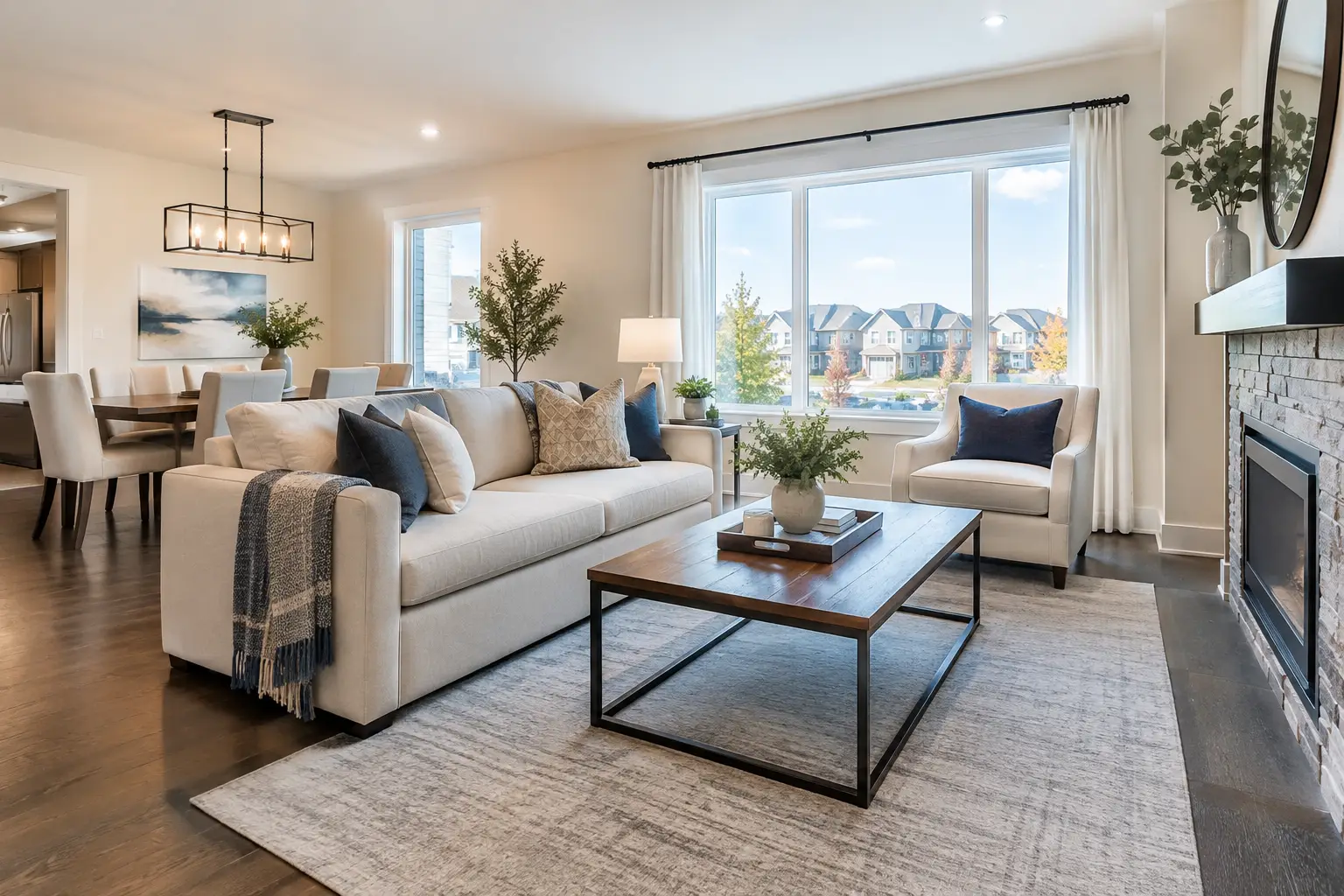
Home Staging That Helps GTA Sellers Compete
Key takeaways
Short answer: Home staging helps buyers picture themselves in the home from the first listing photos, and works best when it’s part of a selling strategy rather than decoration.
- Occupied and vacant homes need different staging approaches.
- Focus on the rooms that matter most in photos and showings.
- Staging can’t fix pricing, location or major condition problems.
- Build staging into the listing timeline and ask questions before you commit.
A buyer may spend less than a minute forming an opinion from a listing’s first photos, then confirm or change that opinion during a showing. That is why home staging is not simply about making a property look polished. It is a selling strategy that helps buyers understand the space, picture their next chapter there, and focus on a home’s strengths before they begin looking for reasons to hesitate.
For sellers in the GTA, where buyers often compare several properties in a single weekend, presentation can influence both attention and momentum. The right staging plan supports the broader listing strategy: accurate pricing, strong photography, a thoughtful launch, and clear communication about what makes the property valuable.
What Home Staging Is Designed to Do
Home staging prepares a property for the market rather than personalizing it for the people who live there. The goal is not to erase every trace of daily life or make a home feel artificial. It is to help each room communicate its purpose, scale, and potential to the broadest likely buyer audience.
A well-staged property can make a compact room feel easier to navigate, show how an open-concept layout can function, and direct attention to features that matter in a buyer’s decision. Natural light, usable storage, an inviting entry, and a clearly defined work or dining area often register more strongly when the space is presented with intention.
This matters online as much as it does in person. Listing photos create the first filter. If rooms appear crowded, poorly defined, or darker than they are, a buyer may move on before scheduling a showing. Strong presentation helps the marketing reflect the property accurately and gives serious buyers a clearer reason to visit.
Start With a Selling Strategy, Not a Furniture Plan
The right level of staging depends on the home, the anticipated buyer, the competition, and the current market. A family home in Brampton may call for a different approach than a downtown Toronto condo, a Mississauga executive property, or a rural Caledon home with more land and a distinct lifestyle appeal.
Before deciding what to stage, assess the listing through a buyer’s lens. What will buyers notice first? Which rooms carry the most weight in their decision? Is there a feature that may be misunderstood without clear presentation, such as a den, an unfinished lower level, or an unusually shaped living space? The answers should guide the plan.
Staging is also most effective when it aligns with price positioning. A property listed in a competitive range needs to show buyers why it deserves consideration beside similar homes. A higher-value listing may need a more complete presentation because buyer expectations are higher. In either case, staging should reinforce the value being presented, not attempt to compensate for a pricing strategy that is out of step with comparable sales and current demand.
Occupied and Vacant Homes Need Different Approaches
An occupied home often benefits from editing and purposeful room definition. Buyers need enough visual information to understand how a household could live there, but they should not feel as though they are walking through someone else’s routines. Personal items, excess furniture, and storage that appears overwhelmed can distract from square footage and functionality.
A vacant property presents the opposite challenge. Empty rooms may feel larger, but they can also feel difficult to interpret, particularly in open-concept layouts or smaller condominiums. Without a sense of scale, buyers may underestimate what fits. Strategic staging can establish the intended use of key spaces and make the showing experience easier to remember.
Neither approach requires staging every square foot. In many properties, the most valuable focus is on the entry, main living area, kitchen, primary bedroom, and any flexible room that buyers may struggle to place. A thoughtful plan concentrates resources where buyer attention is highest.
Where Staging Can Make the Biggest Difference
Staging tends to have the strongest impact when the home has good fundamentals but is not immediately communicating them. A bright home with crowded rooms, a condo with an undefined den, or a well-located property that feels dated because of visual clutter may all benefit from focused preparation.
It can also be especially useful when a seller wants to make a strong first impression at launch. The first days on market often generate the most attention because new listings are closely watched by active buyers and their agents. Entering the market with clear, professional visuals and a home that shows consistently well can help create productive early interest.
That does not mean every seller needs a full-service staging package. Some homes only need a consultation and a targeted preparation plan. Others may warrant rental pieces, especially when vacant or when the existing furnishings do not show the home’s dimensions effectively. The decision should be practical: weigh the expected market benefit against the property’s value range, condition, timeline, and likely buyer profile.
What Home Staging Cannot Solve
Staging is valuable, but it has limits. It cannot correct an unrealistic asking price, conceal material property concerns, or change a location that does not fit a buyer’s needs. Buyers and their representatives will still evaluate comparable properties, condition, layout, monthly costs, and neighborhood factors.
It also should not create expectations that the property cannot meet. Photos and showings need to feel consistent. When buyers arrive and the home differs sharply from what they believed they were seeing online, trust can weaken quickly. The best staging highlights genuine strengths while allowing buyers to evaluate the home clearly.
If a property has deferred maintenance, functional concerns, or a feature that may prompt questions, those items should be addressed through an informed listing strategy. Sometimes the right answer is to prepare the home before launch. Other times, the better decision is to price and position it transparently for buyers who see the opportunity. That is where local market knowledge matters more than a one-size-fits-all checklist.
Build Staging Into the Listing Timeline
Staging works best when it is part of the plan from the beginning, not an urgent task added the day before photography. A seller should have time to evaluate the property, decide what level of preparation is worthwhile, arrange any needed services, and ensure the home can remain show-ready after it goes live.
For households still living in the home, practicality matters. A perfect-looking space that cannot be maintained during showings creates unnecessary stress. A realistic plan identifies what needs to stay accessible, how daily routines can continue, and which areas need the most consistency. Families with children, pet owners, and sellers balancing work schedules all need a process that respects real life.
The listing agent’s role is to connect staging to the entire market plan. That includes reviewing competing listings, advising on timing, coordinating photography and launch details, and adjusting strategy based on buyer response. Staging should never be presented as a stand-alone promise of a higher sale price. Its real value is in helping the home compete with clarity and confidence.
Questions to Ask Before You Commit
Before investing in home staging, ask what problem the preparation is meant to solve. Is the objective to make the home photograph better, clarify the use of important rooms, meet buyer expectations in a certain price range, or help a vacant property feel more livable? A clear answer keeps the investment focused.
It is also reasonable to ask which areas deserve priority, what can be accomplished with the existing home setup, and whether the recommended scope matches the likely return. Sellers deserve direct advice, including when a simpler plan is enough. Good guidance is not about spending more. It is about making decisions that fit the property and the market.
A home does not need to look like a showroom to make a strong impression. It needs to help buyers see its value without working too hard to find it. When preparation, pricing, and local market strategy are working together, sellers can launch with greater clarity and move forward with confidence.