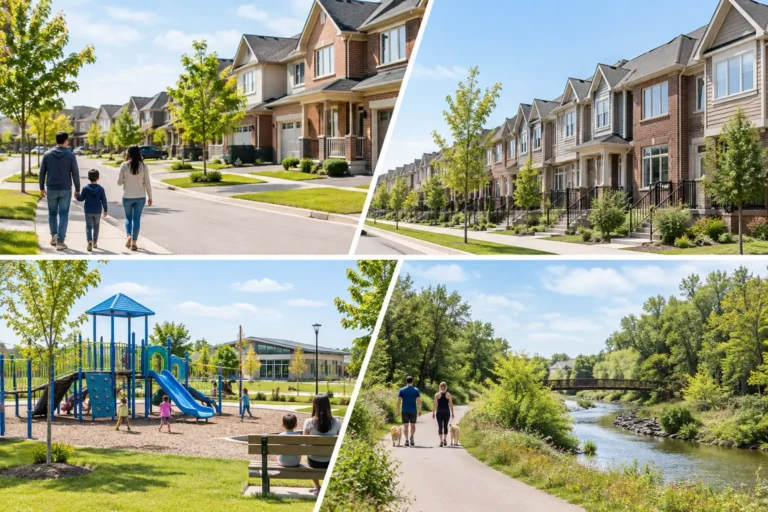

L7A Brampton Real Estate Market Update for Families
A useful l7a brampton real estate market update should answer more than one question: what are homes listed for? Families making a move also need to know which properties are attracting strong interest, where buyers are hesitating, and how location within Fletcher’s Meadow changes the conversation. In L7A, two similar-looking homes can produce very different results depending on lot position, layout, condition, walkability, and access to the routes families use every day.
For buyers, sellers, and local investors, the market is best understood at the street level. A headline about Brampton may offer context, but it cannot tell you whether a particular four-bedroom detached home near Mount Pleasant GO is priced appropriately or whether a townhome in Fletchers Meadow North has meaningful competition. That is where a focused local review becomes valuable.
L7A Brampton Real Estate Market Update: A More Selective Market
The clearest feature of the current L7A market is selectivity. Buyers are still active, especially when a property meets practical family needs, but they are taking more time to compare options. They are looking closely at the full cost of ownership, the home’s condition, bedroom and bathroom count, parking, usable living space, and the effort required after closing.
That does not mean every seller needs to reduce expectations. It means the listing strategy needs to match the property. A clean, well-positioned home with a functional layout and credible pricing can still create urgency. A home that reaches too far beyond recent comparable sales may receive showings without receiving the offers the seller expected.
The difference is often preparation and positioning. Buyers can spot when a home has been priced to test the market rather than to compete in it. They can also recognize when a listing offers clear value against nearby alternatives. In a more selective environment, the first few weeks matter because that is when a new listing receives its greatest attention.
Why L7A Results Vary by Home Type
L7A includes a range of housing types and micro-areas, from detached family homes to semis, freehold townhomes, and condominium townhomes. They do not move in lockstep. Buyers shopping at one price point may be comparing a larger townhome with an older detached home, while buyers at another price point may be choosing between a newer detached property and a home closer to transit.
Detached homes
Detached homes remain a central part of the Fletcher’s Meadow market because they appeal to growing households that want more bedrooms, private outdoor space, and room to stay put for several years. The strongest buyer response typically goes to homes that make daily family life easy: practical floor plans, sufficient parking, finished or usable lower-level space, and a location that feels convenient without being overly exposed to traffic.
For sellers, the key trade-off is price versus momentum. Setting a high asking price can feel safer, but it may narrow the buyer pool at the moment the listing is freshest. A price grounded in recent, genuinely comparable sales can bring more qualified buyers into the conversation and create a stronger negotiating position.
Townhomes and semis
Townhomes and semis often attract first-time buyers, young families, and buyers moving up from condos. This group is usually highly payment-conscious, so condition and value presentation carry real weight. A well-kept townhome with sensible monthly costs can stand out, particularly when it offers the bedroom count and parking buyers cannot easily find elsewhere at the same budget.
Not every townhome should be valued the same way. End-unit positioning, garage access, outdoor space, renovation quality, road exposure, and whether the home is freehold or part of a condominium corporation all affect demand. A seller should avoid relying on a nearby sale until the homes have been compared feature by feature.
What Families Are Evaluating Beyond the House
Fletcher’s Meadow buyers are rarely making a decision based only on square footage. They are evaluating how a home supports their routines. Proximity to parks, community amenities, shopping, and commuter options can shape both interest and resale appeal. Mount Pleasant GO, Highway 410 access, and the ability to get around Northwest Brampton efficiently can matter as much as a small difference in interior finishes.
Families also tend to consider the feel of the immediate street. Is there room for children to play? Is the home on a busy route or a quieter residential stretch? Is there visitor parking nearby? These are not minor details when buyers are planning for the next five to ten years.
This is why broad online estimates have limits. They may recognize postal code data, but they do not always account for the difference between a home backing onto a busy road and one with a more private setting, or between a floor plan that works for a multigenerational household and one that does not. Local context is not an extra. It is part of the value discussion.
Guidance for L7A Home Sellers
Selling well in this market begins before the home goes live. The goal is not simply to place a sign outside. It is to give buyers a clear reason to act.
Start with a pricing review based on recent sold properties, active competition, expired listings, and homes that were withdrawn without selling. Sold prices show what buyers have paid. Active listings show what buyers can choose today. Both matter. If an active property offers more space or stronger finishes at a similar price, your strategy needs to address that reality.
Presentation also affects negotiation. Buyers may accept that an older home needs updates, but they want to understand the scope of what they are buying. A clean, organized, well-documented home reduces uncertainty. That can help protect your price even when buyers are cautious.
Timing should be considered alongside your next purchase. Some sellers benefit from listing first to understand their available equity and likely closing window. Others need a purchase plan in place before exposing their home to the market. There is no one right sequence. It depends on your risk tolerance, the type of home you need next, and how much flexibility you have with possession dates.
Guidance for Buyers Watching L7A
Buyers should be prepared, but they do not need to rush into a home that does not fit. A clear budget, a firm understanding of mortgage approval terms, and a focused list of priorities allow you to move decisively when the right property appears.
Separate your non-negotiables from preferences early. If you need four bedrooms, a garage, a specific commute pattern, or room for family members, those requirements should guide the search. Cosmetic features can often be changed over time. A difficult location, limited parking, or a layout that does not work for your household usually cannot.
When you find a suitable home, assess it in relation to the immediate alternatives, not just its asking price. A home listed below recent sales may be designed to attract multiple offers. Another may be priced higher because of upgrades or a superior lot. The question is whether the total package supports the value, and whether the terms leave you comfortable after closing.
For buyers relocating within Brampton or arriving from elsewhere in Peel, spend time in the area at different points of the day. Morning traffic, school-hour activity, park use, and the drive to transit can reveal more than a quick showing. A move to L7A is often a lifestyle choice as much as a property choice.
The Value of Street-Level Pricing Advice
A reliable market update is not a prediction that every home will rise or fall by the same amount. It is a decision tool. It helps a seller decide whether to list now, prepare longer, or adjust expectations. It helps a buyer recognize fair value and negotiate from a position of knowledge rather than pressure.
Mani Mahitt’s approach is built around that kind of practical guidance: reviewing the home, the street, the competing inventory, and the client’s next step before recommending a plan. That is especially useful in Fletcher’s Meadow, where neighborhood familiarity can change how a pricing strategy or offer should be structured.
If you are considering a move, begin with the property decisions that will matter six months after closing: whether the location works, whether the payment feels sustainable, and whether the home’s value is supported by real local comparisons. A calm, well-informed plan gives you more control over the move and more confidence in the home you choose.