
Living in Fletcher’s Meadow Brampton for Families
A few blocks can make a meaningful difference in how a move feels. When clients ask about living in Fletcher’s Meadow Brampton, they are rarely looking only at bedroom counts or lot sizes. They want to know whether mornings will run smoothly, where children can play, how the commute will work, and whether the home will still fit their life a few years from now.
That is why this neighborhood deserves a closer look than a listing description can provide. Fletcher’s Meadow offers a broad mix of family-oriented streets, established amenities, transit access, and housing choices, but the right fit depends on the pocket you choose and the routine you expect to have.
What daily life feels like in Fletcher’s Meadow
Fletcher’s Meadow sits in Northwest Brampton, largely within the L7A area, with a residential character that appeals to first-time buyers, move-up families, downsizers, and investors alike. Many streets are defined by detached homes, semis, and townhomes built as the area grew through the late 1990s and 2000s. The result is a neighborhood where homes often offer practical family layouts rather than a one-size-fits-all housing stock.
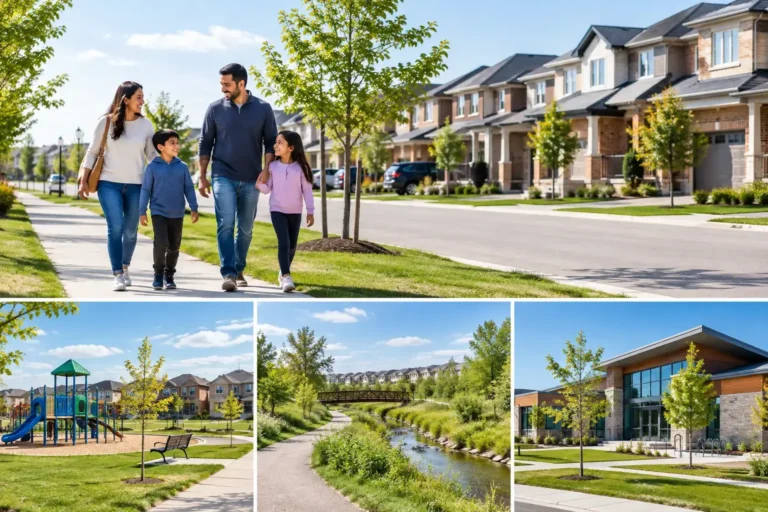
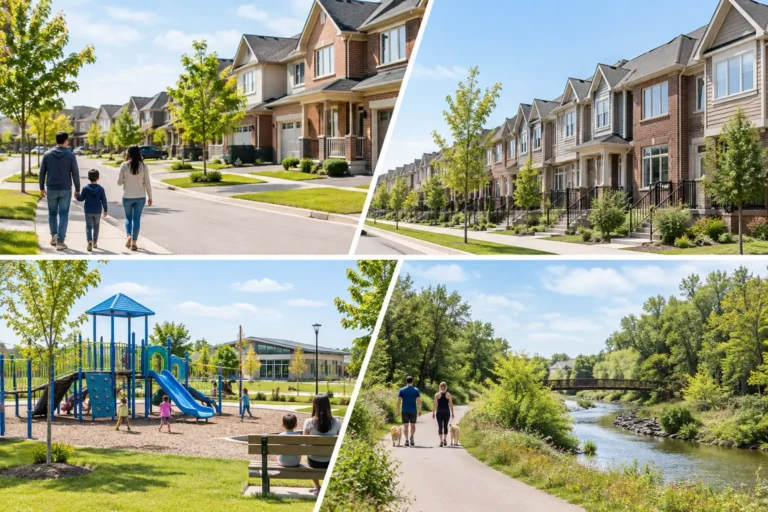
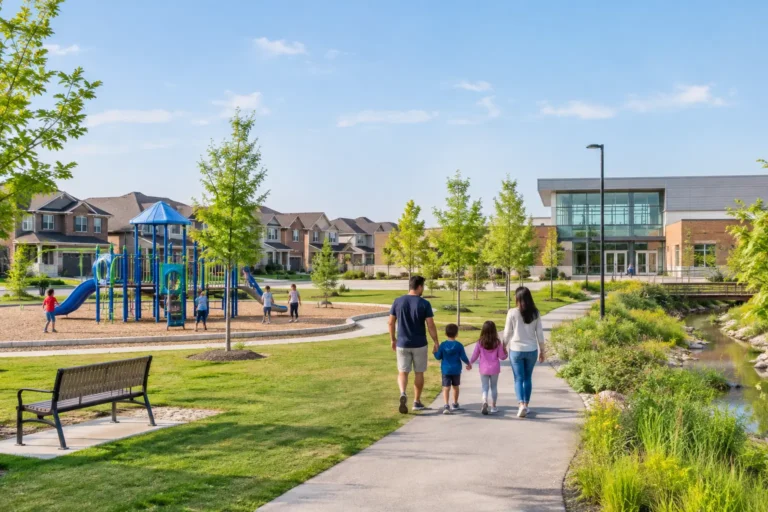
The appeal is largely about convenience without giving up the feeling of a residential community. Local parks, walking routes, everyday shopping, recreation facilities, and schools are woven into the area. For a family, that can mean less time coordinating every errand by car and more flexibility in the week.
It is also a neighborhood with real variation. Fletchers Meadow North, Fletchers Meadow South, Fletchers West, Fletcher’s Creek Village, and nearby Mount Pleasant Village each have different housing patterns, street activity, and access points. A home close to a park may be ideal for one buyer, while another may prefer a quieter interior street or faster access to a main route.
Homes and streets: look beyond the listing photos
The housing conversation in Fletcher’s Meadow often starts with value and space. Buyers may find choices ranging from attached homes that create a more accessible entry point to larger detached properties with multiple living areas, finished basements, and room for changing family needs. Sellers benefit from understanding where their home sits within that range, because a comparable sale from a different pocket or property type may not tell the whole story.
Age and layout matter here. Some homes have the larger rooms and more traditional floor plans associated with their era. Others have been updated over time, which can affect both buyer interest and pricing strategy. A renovated kitchen may draw attention, but fundamentals such as lot orientation, driveway parking, bedroom configuration, basement finish, and proximity to busier roads can carry just as much weight.
When viewing a property, spend time on the street before deciding. Visit at different times if possible. Notice school pickup activity, parking patterns, traffic flow, the condition of neighboring homes, and the walk to the closest park or transit stop. These are small details, but they shape daily satisfaction and resale appeal.
Parks, recreation, and room to stay active
For many households, green space is one of the strongest reasons to consider the area. Neighborhood parks and playgrounds provide easy options for after-school time, dog walks, weekend sports, and a break from indoor routines. The availability of nearby recreation also helps a home feel more functional, especially when outdoor space is limited or a family has active children.
The Cassie Campbell Community Centre is a recognizable amenity for residents in this part of Brampton. Its recreation programming and facilities give families another option close to home, while local trails and park connections support a more active daily rhythm. The best location depends on how you intend to use these amenities. A buyer who values early-morning fitness may prioritize a different route than someone focused on walkable play areas.
Proximity has trade-offs. Being near a park can add convenience and an open feel, but it can also bring more activity, event noise, or street parking at busy times. There is no universal right answer. The goal is to choose a location that suits your household instead of assuming every nearby amenity has the same value for every buyer.
Schools and family planning require a precise approach
School access is often central to a Fletcher’s Meadow home search, but it deserves careful, current verification. Families should consider the programs and support services that matter to them, transportation needs, before- and after-school logistics, and how a future move could affect plans. School boundaries, enrollment practices, and program availability can change, so they should never be assumed from a real estate listing or a neighbor’s experience.
A useful way to narrow a search is to start with the home routine. Ask who will handle drop-off and pickup, whether walking is important, and how long the drive needs to be on a typical weekday. This keeps the decision grounded in real life rather than a broad idea of being “near schools.”
For sellers, the same principle applies to marketing. It is appropriate to highlight nearby educational amenities and the family-oriented setting, while avoiding claims about attendance boundaries or future eligibility that should be confirmed directly with the relevant school board.
Commuting from Fletcher’s Meadow
Commuting is another area where the street-level location matters. Residents may use Mount Pleasant GO for rail travel, while others rely on Highway 410 or major local routes depending on their destination. Access to these connections can make Fletcher’s Meadow a practical choice for households with varied work schedules, but commute times are not identical across the neighborhood.
A home closer to a preferred route can save meaningful time over a year. On the other hand, homes nearest high-traffic corridors may have more road noise or a different feel than quieter interior streets. Buyers should test their own commute during the times they expect to travel, not just rely on an estimated drive time from an app.
If working from home is part of the picture, think beyond the commute. Consider whether the layout offers a genuinely usable office, how many people need quiet space at once, and whether the home can adapt if work arrangements change. These questions are especially relevant when choosing between a larger detached home and a townhome or semi with a more efficient footprint.
Buying, selling, or investing with better local context
Living in Fletcher’s Meadow Brampton can suit many stages of homeownership, but pricing and strategy should be specific to the property and the moment. A buyer should not assume that every townhome is an entry-level bargain or that every detached home will compete in the same buyer pool. Condition, location, lot characteristics, and recent comparable sales all affect the opportunity.
For homeowners preparing to sell, local knowledge helps turn broad market data into a focused plan. The strongest presentation may involve timing, pricing, preparation, and positioning the home for the buyers most likely to value its particular street and layout. Overpricing because of a nearby sale with superior updates or a different lot can cost attention early, when a listing is freshest.
Investors should evaluate the same fundamentals with an added layer of discipline: tenant appeal, practical layout, maintenance needs, and realistic carrying costs. A property near transit, parks, and daily amenities may have clear appeal, but the numbers and condition still need to support the decision. Local demand is useful context, not a substitute for due diligence.
Choose the pocket that supports your next chapter
The best Fletcher’s Meadow address is not necessarily the largest house or the newest renovation. It is the one that works with your commute, your family schedule, your budget, and the way you expect to live over the next several years. That takes a closer look at the neighborhood than an online search can provide.
A clear, low-stress decision starts with the right questions and current local evidence. Whether you are planning a first purchase, a move within Northwest Brampton, or a sale after years in the neighborhood, personalized guidance can help you weigh the trade-offs and move with confidence. Business Built On Trust means making every step clear before you commit.